What Size Boiler Does a Three Bedroom House Need?

Last Updated: November 5, 2026
Quick Summary
Most three bedroom houses in the UK need a boiler size between 24kW and 35kW, with 28kW to 30kW a common choice for a home with one bathroom. The right figure depends on radiator count, insulation and how many showers run at once.
Common boiler sizes for a three bedroom house range from 24kW to 35kW.
A 28kW to 30kW boiler is the most common choice for one bathroom.
Two bathrooms or many radiators point towards 32kW to 35kW.
Measure your mains flow rate by collecting cold water from a tap for 10 seconds.
Book a Gas Safe engineer's sizing check if radiators stay cold or hot water runs out.
Table of Contents
Typical Boiler Output for a Three Bedroom House
Most three bedroom houses in the UK need a boiler with an output of 24kW to 35kW, depending on home size, radiator count and how much hot water is used at once.
Output is measured in kilowatts (kW). A higher rating heats more radiators and supplies more hot water at once; a smaller one may struggle when everyone wants a shower.
Common sizes for a three bedroom home include:
24kW: Suits smaller homes with a single bathroom and modest heating needs
28kW to 30kW: A common choice for a typical three bedroom house with one bathroom
32kW to 35kW: Better for homes with two bathrooms or a larger number of radiators
These are starting points, not final answers. Use them to narrow your search before getting a proper assessment.
The table below sets out the common boiler sizes for a three bedroom house, as described in this section.
Boiler output | Suits | Note |
24kW | Smaller homes, one bathroom, modest heating | Lowest common size |
28kW to 30kW | Typical three bedroom house, one bathroom | Most common choice |
32kW to 35kW | Two bathrooms or many radiators | Larger homes |
Boiler Size Calculator: Working Out Your Own Figure
A useful sizing check starts with measurements rather than bedroom count. Four inputs do most of the work:

Radiator count and output: Add up the kW rating stamped on each radiator (or estimate from its size and type) for a rough heating demand.
Insulation and glazing quality: A well-insulated home with double glazing and loft insulation needs less output than a draughty one of the same floor area.
Mains water flow rate: Measured in litres per minute, this caps how well a combi boiler can perform.
Bathroom and outlet count: Each additional shower or bath raises peak hot-water demand.
Measuring your mains flow rate
Run a cold tap fully for 10 seconds and collect the water in a measuring jug. Multiply the litres by six to get litres per minute, then repeat at a second tap to check consistency. Low figures point towards a boiler that works better with a stored hot-water cylinder.
A transparent worked example
Assume a three bedroom semi with:
10 radiators totalling roughly 9kW of rated output
Cavity wall insulation, loft insulation and double glazing
One bathroom with a shower over the bath
A measured flow rate of around 12 litres per minute
Adding a margin to the radiator total to cover heat loss and cold starts points towards a heating requirement in the low-to-mid 20s kW. Hot-water demand for one shower at a time is modest, so a combi in the 24kW to 30kW band is usually the sensible starting point. With two bathrooms and a measured flow of 18 litres per minute, the hot-water side would push the recommendation towards a higher-output combi or a system boiler with a cylinder.
Treat these figures as estimates, not a specification. A room-by-room heat-loss calculation from a qualified engineer accounts for wall construction, glazing area, exposure and air changes, and can move the required output by several kW.
A calculator that only asks for bedroom count cannot see your insulation, glazing or flow rate, so use it to narrow the range and let a measured assessment confirm the final figure.
Boiler Size for Number of Bathrooms and Combi Boiler Flow Rate
Bathrooms drive the hot-water side of sizing, and the key figure is the boiler's hot-water flow rate in litres per minute, not just its kW rating. A combi heats water on demand, so it serves one outlet well at a time; open a second shower and both can lose pressure and temperature.
One bathroom: A combi in the 24kW to 30kW range usually works well, provided the measured mains flow is adequate.
Two bathrooms: Check the flow rate before buying. Simultaneous showers are the real test, and a combi may struggle if both are running.
Two bathrooms with several radiators or a bath and shower used together: A system boiler with a hot-water cylinder is often the better fit because stored hot water can serve more than one outlet at once.
Flow rate, simultaneous use and stored hot water
Ask your engineer for the boiler's hot-water flow rate in litres per minute and compare it with how many taps and showers you expect to run at once. If you are weighing up options, you can see the boiler installation services available for tailored sizing. Households with two bathrooms, or a bath and shower used together, are usually better served by a stored-hot-water system. To compare the options in more detail, read whether a system boiler is worth upgrading to.
Oversizing, modulation and efficiency
Choosing the largest available kW rating is not automatically better. Modern boilers modulate, turning down output to match demand, and a boiler with a high minimum output can cycle on and off in a well-insulated home, wasting fuel and adding wear. Match the modulation range to the home's actual heat loss so it runs steadily at low output on milder days.
Signs a Boiler Is Too Small and Booking Your Sizing Check
A boiler that is too small often shows clear warning signs:
Radiators stay cold on the coldest days
Hot water runs out or drops in temperature when a second tap is used
The boiler cycles on and off frequently
Heating takes a long time to reach the set temperature
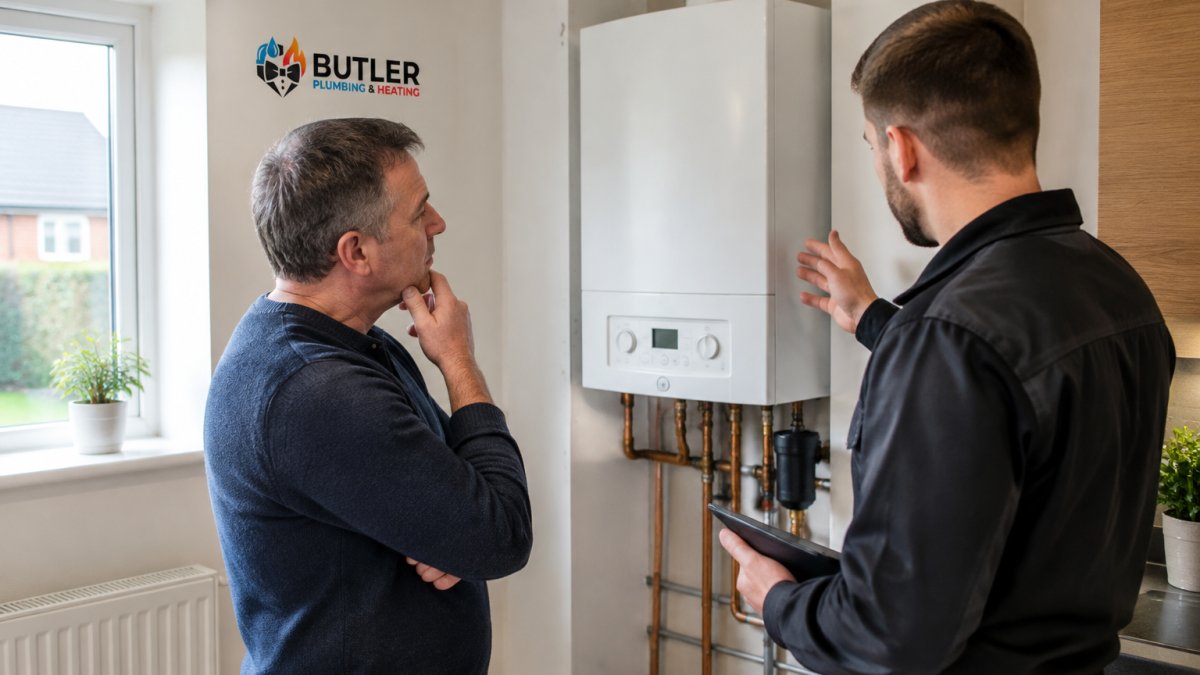
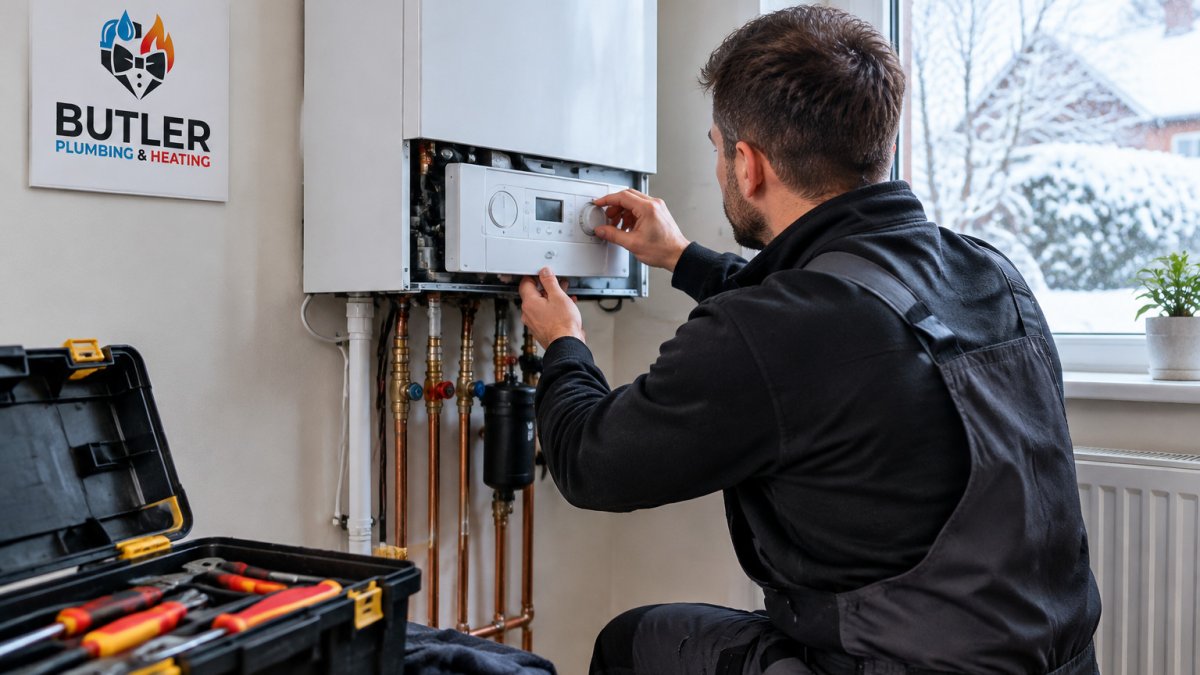
If you notice these problems, get a sizing check from a Gas Safe registered engineer. If you are in Bracknell, you can find a boiler engineer in Bracknell to arrange one. Butler Plumbing can assess your home and recommend the right boiler. Contact us for a consultation and quote for a clear, detailed recommendation. You can also book a boiler service in Woking if your current system needs checking first.
Frequently Asked Questions
What size boiler is usually suitable for a three-bedroom house?
A three-bedroom house commonly needs a boiler in the region of 24kW to 35kW, but the right figure depends on how much heat the property loses and how many bathrooms and radiators it has. A well-insulated home with one bathroom may suit the lower end, while a draughty property with two bathrooms and many radiators may need more output. A qualified engineer can measure the heat loss and water flow to confirm the correct size before any installation goes ahead.
Does the number of bathrooms affect the boiler size I need?
Yes. Each bathroom adds to the demand for hot water at the same time, particularly where showers and taps are used together in the morning. A combi boiler supplies hot water directly, so its output and flow rate need to cope with simultaneous use. Where two or more bathrooms are used at once, a system or regular boiler paired with a hot-water cylinder is often more suitable than a combi.
Can a boiler that is too big cause problems?
An oversized boiler can cycle on and off more often than necessary, which can reduce efficiency and wear components faster. Modern boilers modulate their output to match demand, which reduces the impact, but a unit sized far above the real heat loss still wastes fuel and money over its lifetime. Matching the output to a proper heat-loss calculation is the most reliable way to avoid this.
Comments